Monday, January 28, 2013

Why It Still Pays to Meet in Person

No matter what industry we are in, we are all in the people business. Forming relationships with our clients and colleagues is a vital part of success in any field. While it might be more convenient and perhaps more economical to text, email or Skype, nothing beats the power of a face-to-face connection. It's the best way to explore and build consensus and encourage discussion. How else can we expect to get to know one another?

But sitting across the table from someone, sharing a glass of wine or a cup of coffee seems to have become a luxury. Some suggest that our nation wouldn't have found itself on the edge of a fiscal cliff if our President cultivated more personal relationships with members of Congress. The same can be said of both the Republicans and Democrats in Congress: if our politicians committed to socializing across party lines, discussing and forging personal relationships, it might help build trust and lead to solutions. 

Lyndon Johnson used to invite 20 members of Congress to dinner every week. They brought their spouses and Lady Bird would give them a tour of the White House before dinner. By the end of his term, Johnson knew every member of Congress and members of Congress knew each other. These face-to-face meetings helped build relationships that helped Congress carry out the business of the nation.

How you say something is often more powerful than what you say. The subtle nuances of communications - body language, gestures, facial expression, tone of voice - cannot be translated into a text or an email. In fact, sometimes your words can be misinterpreted when then are typed rather than spoken.

Information can be shared virtually, but when it's done in person, it helps to build long-lasting relationships and trust that will inevitably grow your business. The bottom line is that today's technology can help us on our journey to becoming master communicators by providing an addition, not a replacement, for face-to-face communication.


Are You Addicted to PowerPoint?

If you use PowerPoint when speaking to an audience, understand that PowerPoint is not the presentation, it is simply an enhancement to the presentation. 

With that said, don't even think about writing your entire speech on the slides. PowerPoint is not a teleprompter, nor is it an alternative to a written report. The slides should be meaningless without your commentary. And when using bullet points, limit yourself to 3 bullets per slide. And consider - strongly consider - incorporating graphics and pictures to avoid dull, wordy, bullet point ridden slides. And do not, not even for one minute, turn your back to the audience and read the slides. In other words, don't let PowerPoint become your crutch. Slides with lots of bells and whistles give your audience something to look at, but they also give them an excuse to not listen. 

It's hard to imagine professional business presentations done without PowerPoint. That's why I'm challenging you to present - just once - without it. Without PowerPoint, you can be the visual effect and the sound effect of your presentation. And perhaps your audience will be more interested in what you have to say since there won't be any slides to distract them? It will mean that as the presenter, you need to be well-prepared and well-versed in your topic. Or course, you should always be well-prepared and well-versed, but taking the crutch of PowerPoint away makes it that much more important.

But if you can't go cold turkey, and insist on using PowerPoint, at least strive to be more visually interesting to engage your audience.When Amazon CEO Jeff Bezos unveiled Kindle Fire HD he wanted to stress that the new and improved e-reader had an 8 week battery life. He could have added that feature to a long list of bullet points. Instead, he chose a graphic to make his point. On one of his PowerPoint slides, he showed a calendar with the months September and October. September 6, which was the day of his presentation, was highlighted in red. Bezos explained that if turned on during his presentation, the Kindle Fire's 8 week battery would last until the end of October. That's a powerful image that most likely will not be forgotten.

Used properly and prudently, PowerPoint does a fabulous job - if you remember that it is not designed to be the star of the show.

There's Not an App for That


I am a big fan of Slate.com, the online current affairs and culture magazine. I listen to Slate's podcasts, I read all of the regular columns, and I especially enjoy Farhad Manjoo's short videos and articles. Manjoo writes about technology in a way that I can get my head around it. Together, he and his handy sidekick, The Hand Model, review some of the best applications for the web, mobile phones, and social media. 

So, you can imagine my delight when I came across one of his videos entitled Get Better at Public Speaking where Farhad Manjoo reviews apps that help you speak in front of a crowd. I watched his video and then downloaded all of the apps he mentioned. SlideshowRemote allows you to control a PowerPoint presentation from your smart phone. While presenting to an audience, you can view the current slide and your notes in portrait, or you can view the current slide and the next slide in landscape. Simply swipe forward to advance, or swipe back to return to the previous slide. This is a perfect app to help you rehearse your presentation.

Presentation Clock is an app that does one thing extremely well: it displays large, easy to read numbers that change colors at intervals that you determine to help keep you from speaking too long. When the timers hits 0, the colors invert (from red on black to black on red) and continue counting up indicating how long you've gone over your time limit. It's fully customizable with simple touch controls.

But here's where Manjoo's video is misleading: none of these apps actually make you a better speaker. There are tools that will help make a difference in your ability to communicate more effectively, but you already have those tools - they can't be download in the form of an app.

So, what are the tools that you already have?

You've got the basics - a voice, a smile, eyes, gestures, body language. You've got a message. You've got two ears. You've got your personal style. And you've got fear. And believe it or not, even fear is a tool that you can use. Learning how to put each of these tools to work will lift you from where you are now to the level of master communicator in a way that no app will ever be able to do for you. If you put these tools to work, you can change from the inside out. Your outlook on yourself and others will shift so that personally and professionally - you will soar. That's not a claim that we at Ty Boyd, Inc. don't take lightly.


Wednesday, December 5, 2012

Blurts of Fury: The Angry Email

I have long been a fan of Philip Galanes' weekly advice column, "Social Q's," published in the Sunday Styles sections of The New York Times. The column offers lighthearted advice about awkward social situations and Galanes' witty style is as entertaining as it is informative. 
 
He is always sharp, but never biting. He is always smart, without being sassy. And Galanes always offers wise advice with a catchy turn of phrase. Take, for example, this exchange where he helpfully spells out what passes for acceptable behavior in a world of texting,

At what age are people too old to use abbreviations like LOL in text messages and email correspondence?
Laura, New York
It its landmark decision, "Tiger Beat Magazine v. Betty White," the Supreme Court of Mutton Dressed as a Lamb ruled that we are never too old to use the argot of adolescent girls (ironically or otherwise). But the court also noted that such right does not prevent sensible folks from rolling their eyes at us after the ripe old age of 23.
In his weekly column, Galanes details how to handle relationships, moral dilemmas and everyday scenarios that are made all that more difficult by the peculiarities of the digital world. In an interview that aired on NPR, he tells Fresh Air's Terry Gross, "Before we started talking to people almost exclusively on email and Twitter and Facebook, we could hear a little hitch in someones voice and think, "oh, oh, there's a problem. I better circle back around that." So we don't do that anymore. Everything now is type and send, type and send."

And this type and send mentality can get us into trouble. One piece of advice Galanes repeatedly offers his readers is never email when you're angry. At the first sign of trouble, he warns that you should step away from your keyboard. Don't type and don't send a thing. Here is the advice right from the horse's mouth:
"I know what a rush it can be to channel our meanest impulses into digital message-bombs. There's something so alluring about that blank screen - just waiting to be filled with expletives and rage, horrible things we would never say to another person's face.  But Digital Warriors, tamp down your fighting impulse before launching that first grenade. And if your pal (or sibling or coworker) slips, and fires the first missile at you, be the bigger person and delete it. Then march to the phone and talk it out. You'd be amazed at how quickly we can solve most of our problems - as long as we adopt a respectful posture that signals our willingness to listen as well as speak."
At Ty Boyd, we couldn't agree more. Effective communication requires dialogue. And engaging in dialogue implies that you do something besides speak. It implies that you listen. Believe it or not, some of us are less effective at listening than we are at speaking. But we can learn. 

Give us a call at Ty Boyd Effective Communications & Coaching and we can help with both the speaking and the listening.


Tuesday, October 30, 2012

Communications Skills are the Key to Success in Life, Work and Relationships

Most families deal with a little stress from time to time, but during the holidays, the stress level can go through the roof. It doesn't help that we are constantly bombarded with that Norman Rockwell image of the "perfect" holiday which causes parents and children to develop unrealistic expectations.

A big part of the stress is a direct result of poor communication - which is as common as overeating during the holidays. Arguments ensue over shopping, decorating, attending parties and all the other minutia that holidays involve.

Take, for instance, the holiday photo card. I gave up sending the photo card long ago. While I always managed to get a great picture of my kids, it was not without a great deal of effort and a lot of stress. As soon as I mentioned the need to take a holiday photo, my son, who is normally a pretty easy going kid, would turn into a crazed lunatic who refused to cooperate, much less smile. My daughter copped an attitude of monument proportions. And my husband, who is a fantastic photographer, would forget to bring his flash to the shoot or would take 20 minutes of photos with the wrong lens.
The year that finally put me over the edge was when my son bit my daughter during the photo shoot and my husband captured it beautifully on film (yes, we were using film back then). My son looks rather smug while my daughter, holding her wounded arm, is crying her eyes out. Of course, as luck would have it, it was the only shot that my husband captured beautifully that year. I was tempted to use it for my card with the caption, "Peace on Earth, Goodwill Toward Men" but I didn't think sarcasm belonged in a holiday card.

Fighting and stress do not have to be part of your holiday tradition. Set a time to discuss family issues before the holidays are upon you. Being proactive and prepared can ensure that everyone enjoys the holidays. It takes time and effort to develop family communication skills, but a family that can communicate well can better handle stress, can resolve daily conflicts, and will raise children who are able to communicate well for the rest of their lives.

At Ty Boyd Executive Communications & Coaching, we believe that good communication skills are key to success in life, work and relationships.

Who is Your Trusted Adviser?

To build on your public speaking skills, we at Ty Boyd, Inc. are big believers in practice. If you practice, you will be ready, you will be effective and you will succeed as a communicator. Through practice, you will learn to make better use of your voice, to stand tall, to move effectively, and to connect with your audience. All of your speaking tools become more polished with practice.

Practice is important, but getting feedback also helps on the journey to becoming an effective communicator. Not just any old feedback; honest feedback. And that's not always an easy thing to get. Colleagues are often hesitant to offer reviews of their peers and even less willing to share their bona fide opinions with their managers.

Many of us have a trusted adviser - somebody who wants us to succeed, who believes in us, and who can tell us the truth while being supportive. If you do not have somebody - or a few somebodies - like that in your professional life, you need to cultivate those relationships. Before you can get honest feedback on your speaking skills, you need to have built a sense of trust and respect with an adviser who has your back, but will give it to you straight.

Once you have established a rapport, you create an opportunity to be coached. Don't confuse constructive criticism with coaching; despite the term, most constructive criticism isn't constructive or beneficial because it puts you on the defensive. The distinction is subtle, but important to the faculty at Ty Boyd, Inc. A Ty Boyd coach is someone who invests in your growth, believes you can do better, and works with you to do so. Our coaches are trusted advisers who help clients discover their own authentic style and voice. If you are interested in discussing how a communications coach would work for you, please let us know.

Thursday, October 18, 2012

You've Got Three Minutes to Make an Impact

Speeches do not have to be long to be great. Speeches do not have to be long to be important. In a few short minutes, a speaker can deliver a powerful message with significant impact. As long as the speech is relevant and it inspires an audience, the speech has the potential to be great.

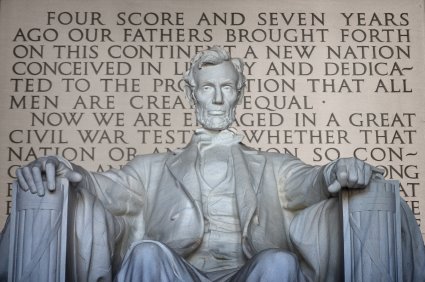
During one of our nation's darkest periods, Lincoln's Gettysburg Address was a passionate call for action that inspired and motivated his audience. Lincoln spoke to a crowd of 15,000 at Soldier's National Cemetery in Gettysburg that day in 1863, but his carefully crafted message connected with an entire nation. A nation, in the midst of a civil war, fighting to determine whether the Unites States could continue to exist.


Lincoln was wrong when he said, "The world will little note, nor long remember what we say here." The Gettysburg Address, has become one of the most quoted, most memorized pieces of oratory in American history. In fact, on September 11, 2002, one year after the attacks on the World Trade Center, and one hundred and thirty-nine years after Lincoln delivered his famous speech, New York Governor George Pataki chose to recite the Gettysburg's Address at a memorial service at Ground Zero. Once again, Lincoln's words, which describe a journey more than an outcome, captured the spirit of a nation seeking to maintain their unity in the face of divisiveness and violence and striving for peace, harmony, liberty, freedom and justice for all.

It sounds as if a three-minute speech would be too short to make an impact, but clearly that is not the case. If you had just three minutes to speak, what would you say?